DEUTSCHE FASSUNG SIEHE UNTEN
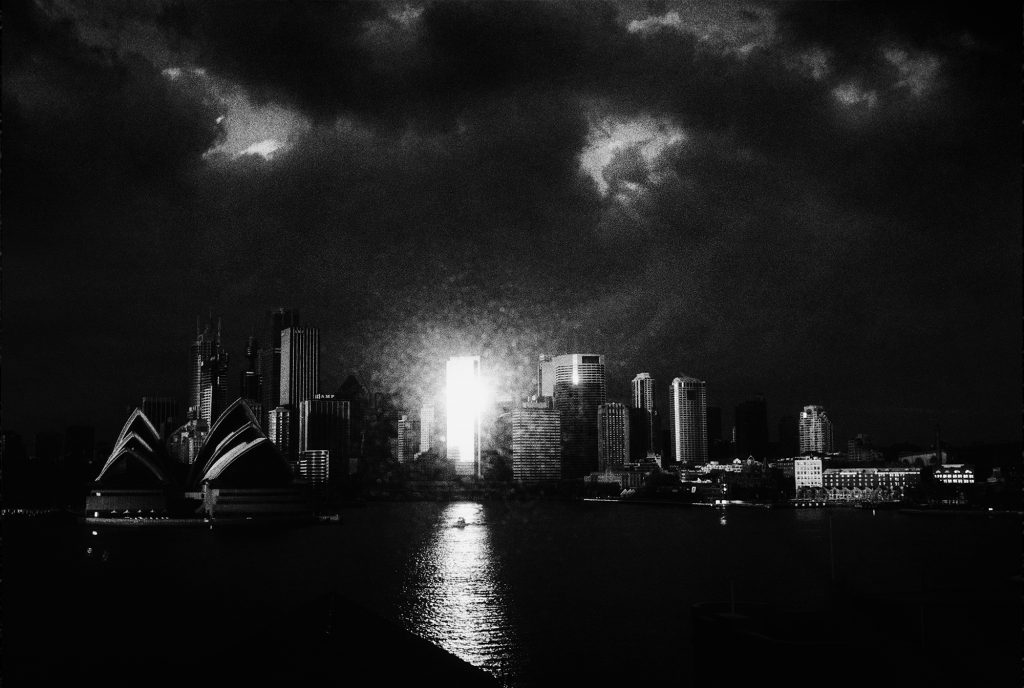
Trent Parke is an Australian photographer, born in 1971, in the city of Newcastle in New Youth Wales. He has been a full member of MAGNUM since 2007, the first Australian to do so. On the MAGNUM page you can also find the sentence that appears in many variations in the biographies of famous photographers: “Using his mother’s Pentax Spotmatic and the family laundry as a darkroom, he began taking pictures when he was around 12 years old.” So he took photographs from a young age. He became famous in the photography scene with a legendary illustrated book, which I also rank among the TOP 10 in my virtual list of favorite photography books, and tends to be quite high up: MINUTES TO MIDNIGHT, published by Steidl in Göttingen in 2013, most recently in its fourth edition Printed in 2017, currently reported as “Out of Print” by Steidl. The series was originally published in 2005 in a small 32-page edition by Filigranes. MINUTES TO MIDNIGHT shines with a brilliant visual narrative, a great model for how to dramaturgically structure a photo book, and to this day a standard study object in corresponding photo book workshops. The book cover, decorated with strange flying foxes, has now become something of an icon in contemporary illustrated book history. “Minutes to Midnight is an apocalyptic book, but they are real documents, they’re real events, real moments in time that have happened,” Trent Parke once said in an interview. In dark, mysterious black and white images, Trent Parke told of a trip through Australia. Many of the images derive their tension from the secrets hidden in them, for example the flying fox image on the cover, which is further alienated by the material of the cover, or the images of children with inflated rubber gloves over their heads, dead kangaroos, glowing apparitions.

In 2020 the book with the mysterious title “Crimson Line” was finally published. A Natural History of the Cochineal”. It’s about color and light, about the effects of industry on the colors in the sky. Purple, carmine red, apricot, with variations in between on the cochineal scale insect, from whose female animals carmine red was once obtained. Not unexciting, great design, mysterious, but then again I’m happy when people can be seen in Parke’s pictures.
So in the summer of 2023, the book “Monument” was published by Stanley/Barker in England and Trent Parke’s reputation was now so great that the first edition was sold out in a very short time. In seven hours, as the publisher writes. Due to the complex production process of the book, the second edition took some time to arrive, but this too has now been published. The third edition is already being planned and will appear in March 2024. The third edition can now be pre-ordered, see link at the end of the article.
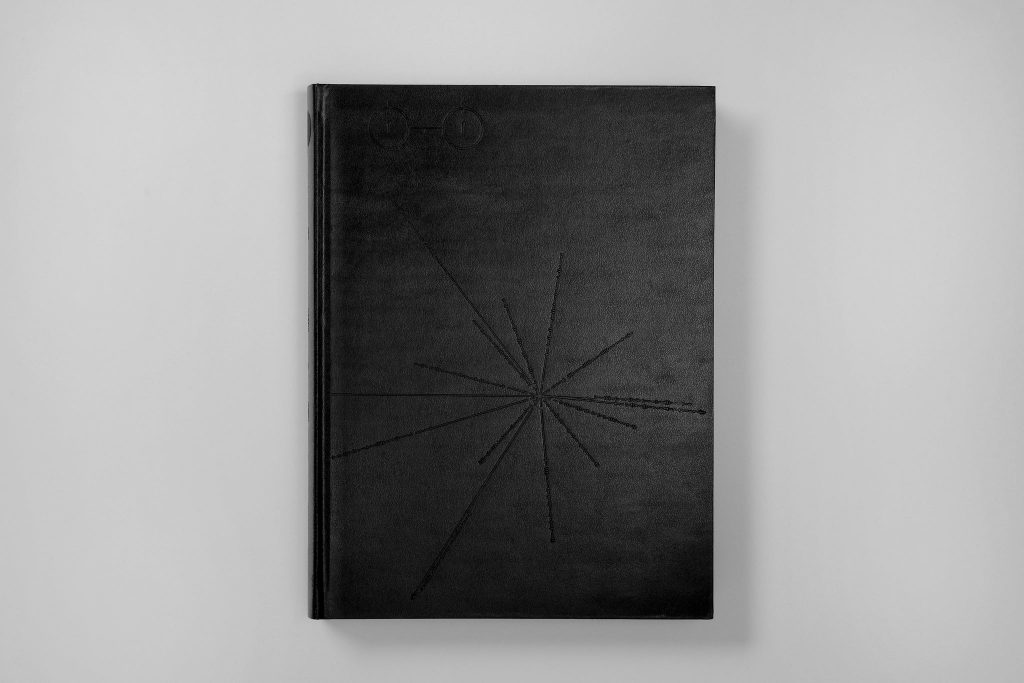
But what kind of work is MONUMENT? What is initially impressive is the external appearance: everything is initially deep black on the outside, the leather binding, the book edges. Nowhere is there a book title or the author’s name on the cover, neither front nor back nor on the spine. The book comes with a metal plaque that says: The title, the author, the year of publication and the publisher. And a picture of the Earth, looking towards Australia. And, surprise: there isn’t any more text in the book. Nothing. No foreword, no dedication, no commentary, no captions, no page numbers, not a single written word. Except: A page with Morse code embossed at the beginning (I was too lazy to decipher what it says) and a page with Braille embossed at the end (again: I have no idea what is written there). But the leather of the cover is also embossed with sketches – which I recognize: These are the pictures that the Voyager space probes have on board in case extraterrestrial existences encounter the probes at some point: They show the anatomy of a man and a woman , the position of the sun in relation to some known pulsars, the symbolic solar system with the planets. Mysterious.

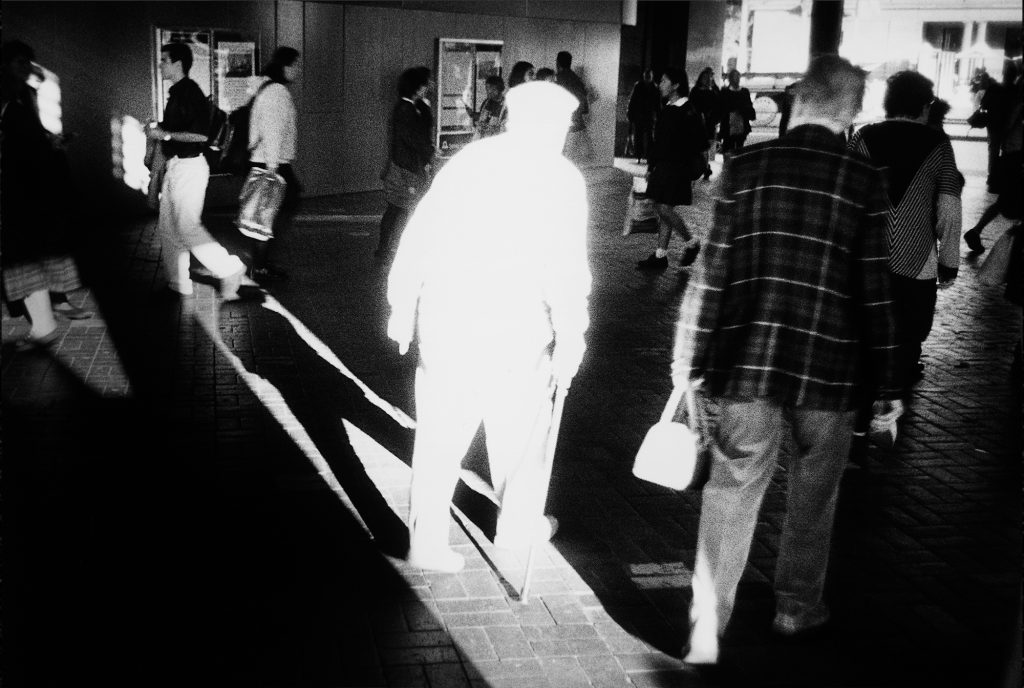
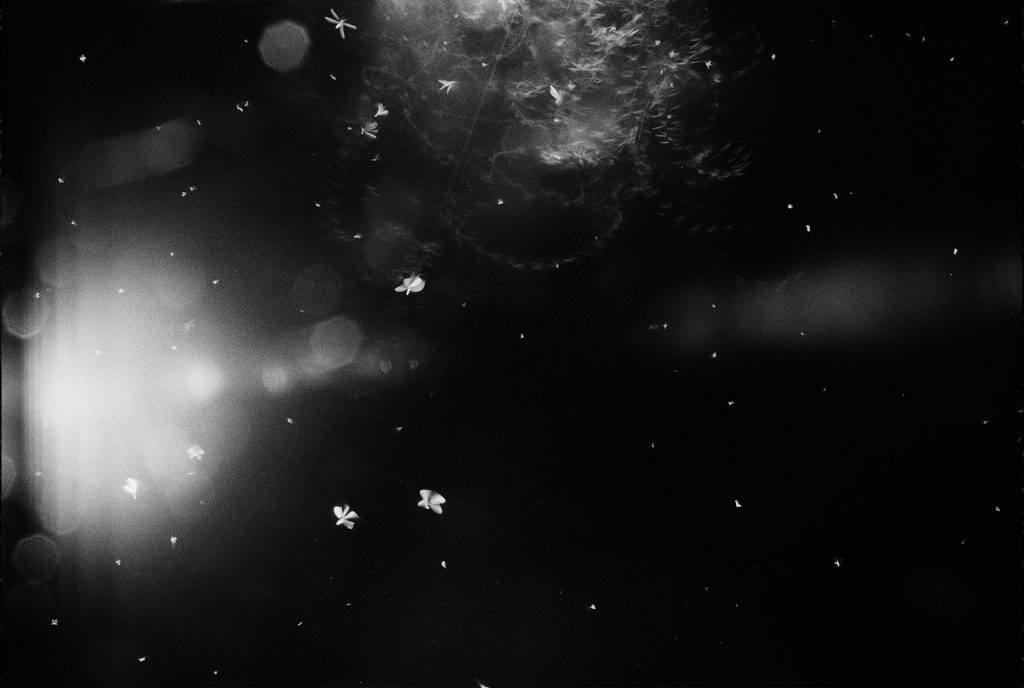
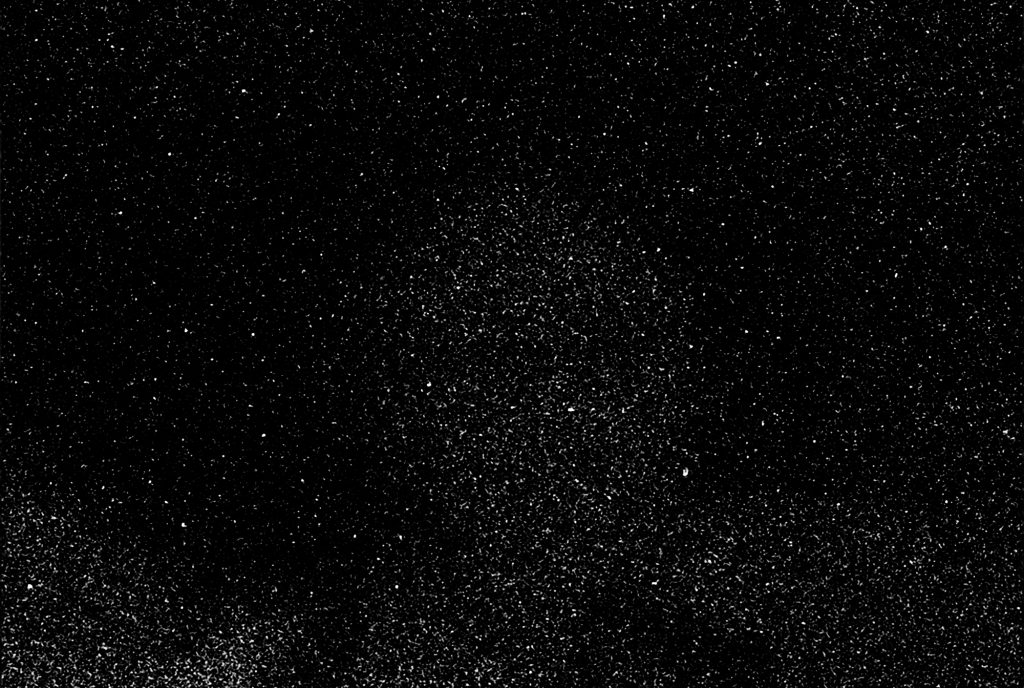
Finally, the pictures inside the book also partly take up motifs from the “Minutes to Midnight” series. The first picture shows the starry sky. It is the Southern Cross. Those who know astronomy now know that we are in the southern hemisphere, probably still in Australia. At first glance, the next few pages show more pictures of stars. Or not? By the fifth picture at the latest, we can now see that these are thousands of insects irradiated by an illumination source. Based on the first picture from ” Minutes to Midnight”, except that that one showed dark insects against a light background, but this one showed bright insects against a night sky. Let’s turn the page further. We now come to more spots of light against a dark night: lights from cars in a traffic jam on a street, finally lightning, then we enter civilization: legs crossing a street illuminated by cars at night. Then we enter cultural history: an alarm clock with a Jesus on the cross as a motif. It continues: bridges, people, backlighting, blurred faces in the foreground, and finally the space motif from the beginning reappears in one of the pictures: the moon on some advertising poster or something. Now more and more images are appearing that resemble conventional street photographs, with drastic light-dark contrasts and mysterious content. people in the city. A guy in a trash can, a glowing lady with a billboard. Quite funny.
Now an association to this story arc occurs to me that helps me to classify the narrative of this book: Walter Ruttmann’s expressionist documentary BERLIN – THE SYMPHONY OF THE GROSS CITY, that experimental montage of associatively put together moving images from Berlin in 1927. Chaos, coincidence, People, associations, cityscapes.
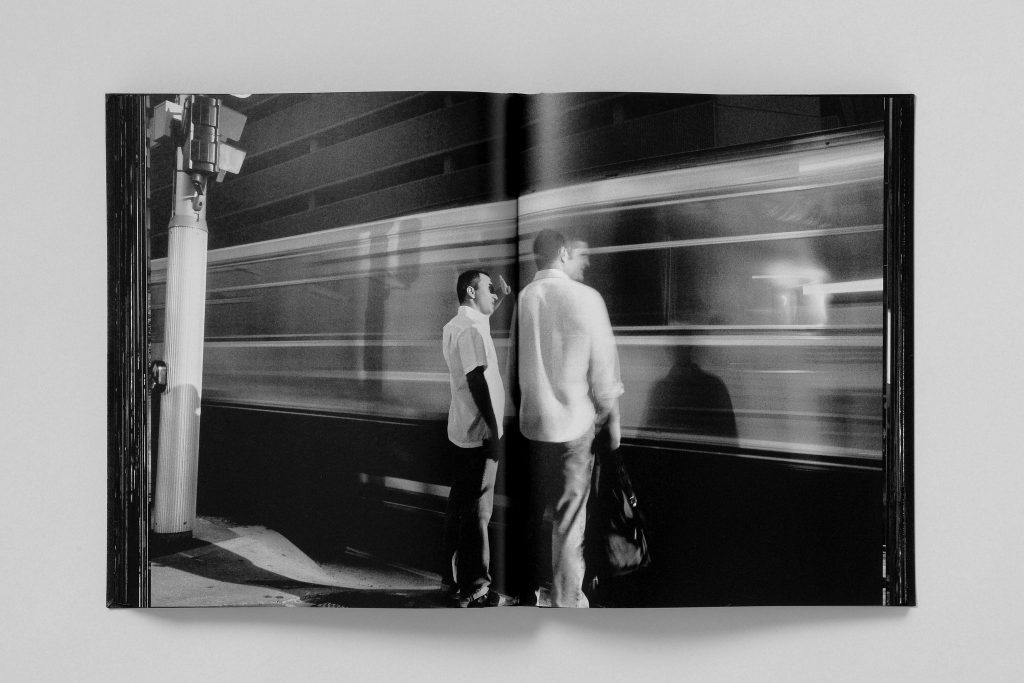
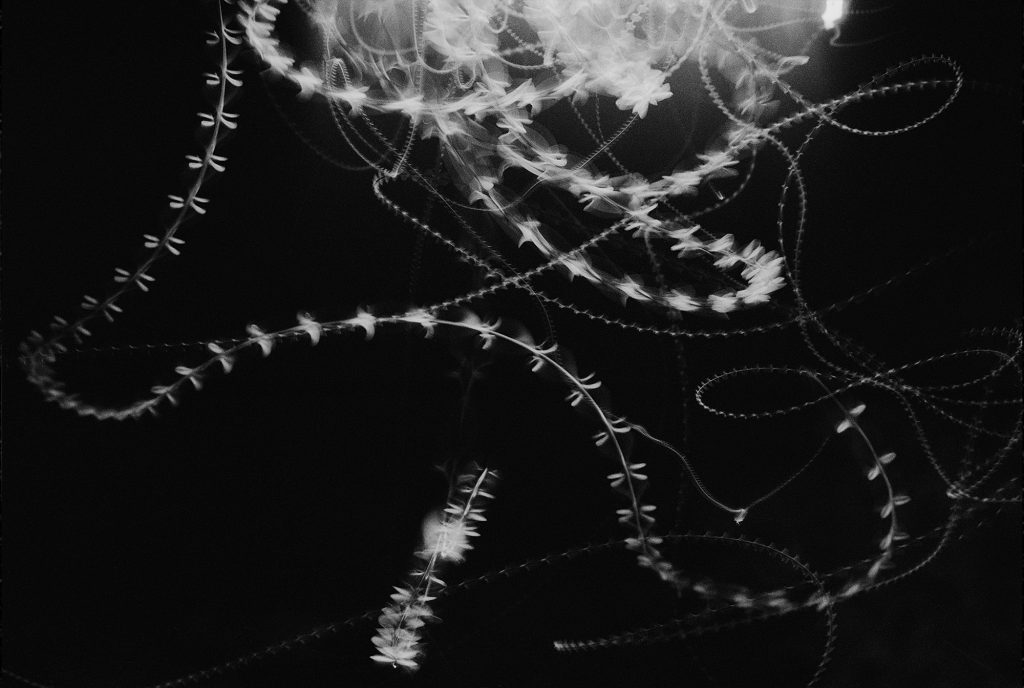
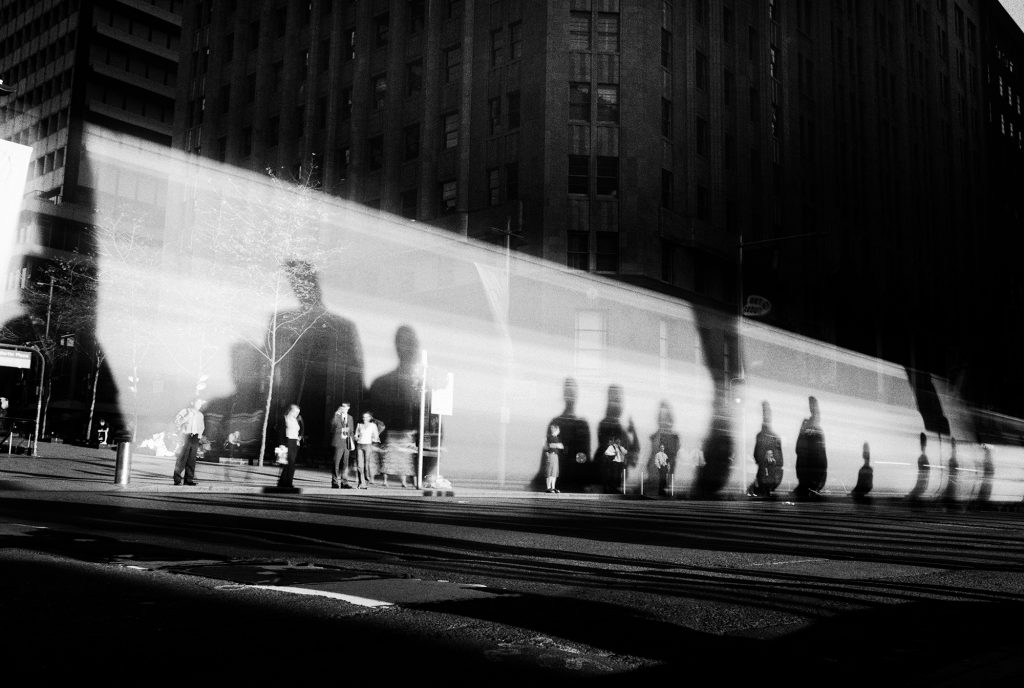
Finally, the aforementioned insect image, which forms the beginning of MINUTES TO MIDNIGHT, also appears in MONUMENT. We are on the way to abstraction again: insects, perhaps traces of sparks, perhaps of bats. And then we encounter the darkly contrasted image of the silhouette of Sydney, including the opera, the image that was also present in MINUTES TO MIDNIGHT. Again and again we will see images that we already know. Or I think I know her, now in a new context. A strange figure with a helmet that stretches out all fours now appears several times – it looks a bit like the flying foxes already mentioned, which have stretched out their wings. Increasingly frequent shadows of people on long-exposure vehicles passing by, this is also a motif, is a series that already existed in MINUTES TO MIDNIGHT.
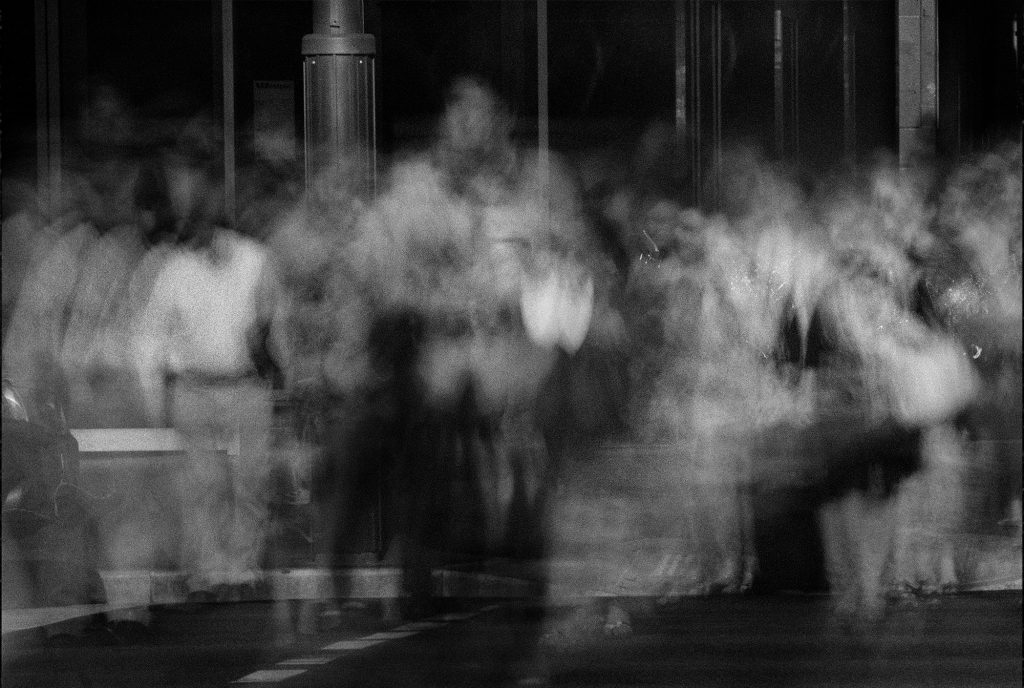
Blurry, out of focus subjects of people on the street, enlargements of people, you can see the grain of the film. The depictions of people now also become more abstract again, until the faces can only be vaguely recognized. The grain of the film material is becoming more and more prominent. And finally this grain turns back into images of the starry sky, like at the beginning of the book.
The interpretation of this book is open. It refuses razor-sharp analyzes and interpretations. A few things fascinate me: how Trent Parke manages to tell a completely different story using some of the same images as from MINUTES TO MIDNIGHT. But what do we experience with this book? Do we look at the world through the eyes of aliens who have found the recordings on the Voyager probe and now want to go back to Earth to see what they find here? This would be supported by the complete rejection of text, title, explanation – the view from a foreign place. Perhaps. But perhaps that is an interpretation that is far too concrete, too unraveled.
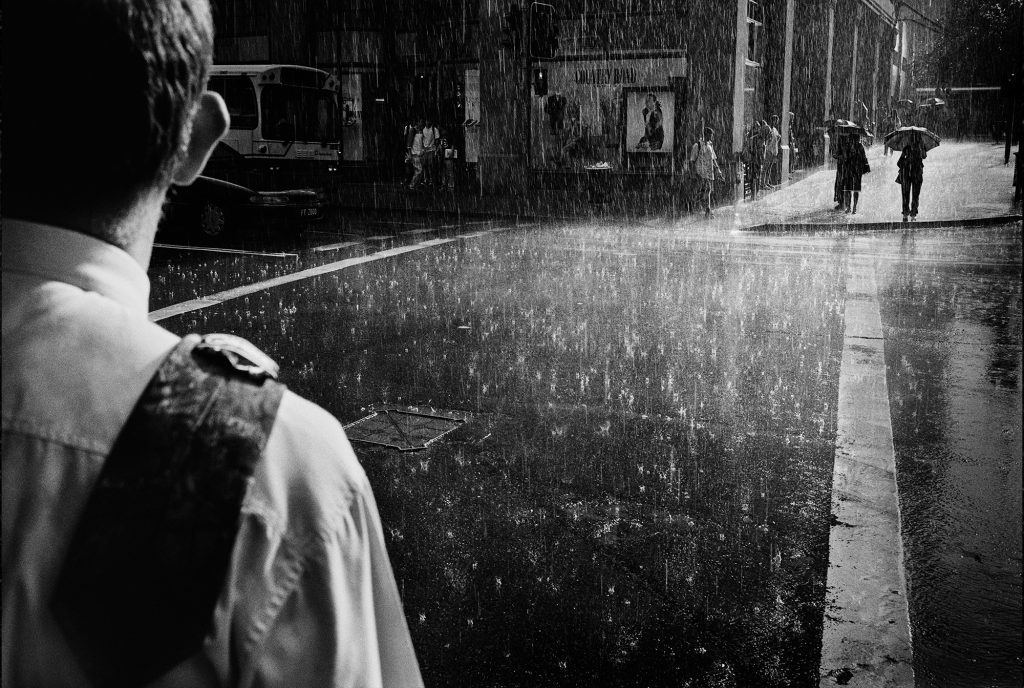
I actually like my Ruttmann association, the idea of seemingly randomly assembling cityscapes, but which combines into a visual-musical composition, full of counterpoints, motifs, melodies, themes. A book-film, as well as a book composition. MONUMENT is a fascinating, bold, impressively crafted, enigmatic book. It’s a stroke of luck that such an unwieldy work can become a success.
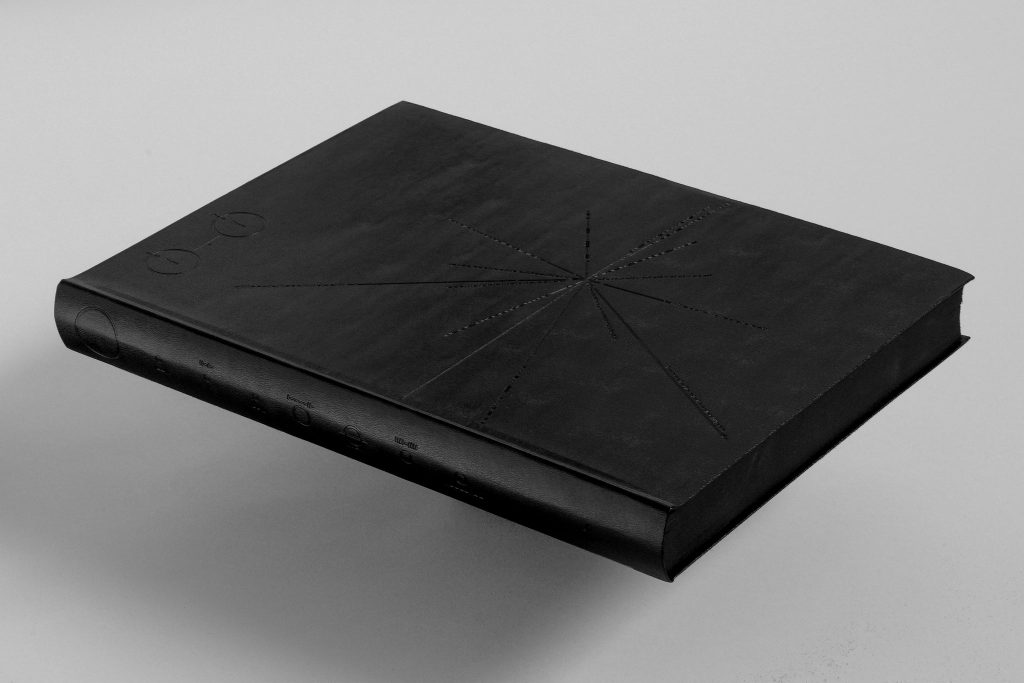
ISBN—978−1−913288−57−0
Pages—296
Details—Flexibound / Embossed leather cover / Blind stamped end sheets / Sprayed edges / Metal plaque / Multiple paper weights / Gatefolds
Size—314x251mm
+++
GERMAN VERSION
Trent Parke ist ein australischer Fotograf, mein Jahrgang, 1971, geboren in der Stadt Newcastle in New Youth Wales. Seit 2007 ist er Vollmitglied bei MAGNUM, als erster Australier. Auf der MAGNUM-Seite ist auch jener Satz zu finden, der in vielen Variationen in den Biografien berühmter Fotografen steht: „Using his mother’s Pentax Spotmatic and the family laundry as a darkroom, he began taking pictures when he was around 12 years old.“ Von jung auf hat er also fotografiert. In der Fotografenszene berühmt geworden ist er spätestens mit einem legendären Bildband, den auch ich in meiner virtuellen Liste der Lieblingsfotografiebücher unter die TOP 10 zähle, und zwar tendenziell recht weit oben: MINUTES TO MIDNIGHT, 2013 bei Steidl in Göttingen erschienen, zuletzt in vierter Auflage 2017 gedruckt, derzeit von Steidl als „Out of Print“ gemeldet. Ursprünglich erschien die Serie 2005 in einer kleinen 32-seitigen Ausgabe bei Filigranes. MINUTES TO MIDNIGHT glänzt durch eine brillante visuelle Erzählung, ein großes Vorbild dafür, wie man ein Fotobuch dramaturgisch aufbaut, bis heute ein Standardstudienobjekt in entsprechenden Fotobuchworkshops. Das mit sonderbaren Flughunden geschmückte Buchcover ist mittlerweile quasi eine Ikone der Gegenwartsbildbandgeschichte. “Minutes to Midnight is an apocalyptic book, but they are real documents, they’re real events, real moments in time that have happened”, sagte Trent Parke einmal in einem Interview. In dunklen, mysteriösen Schwarzweißbildern erzählte Trent Parke von einer Reise durch Australien, viele der Bilder erhalten ihre Spannung durch die in ihnen verborgenen Geheimnisse, eben zum Beispiel jenes Flughundbild auf dem Cover, das durch den Stoff des Einbandes eine zusätzliche Verfremdung erfährt, oder die Bilder von Kindern mit aufgeblasenen Gummihandschuhen vor dem Kopf, tote Kängurus, leuchtende Erscheinungen.
Im Jahr 2020 erschien schließlich das Buch mit dem mysteriösen Titel „Crimson Line. A Natural History of the Cochineal“. Es geht um Farbe und Licht, um die Auswirkungen von Industrie auf die Farben am Himmel. Lila, Karminrot, Apricot, dazwischen Variationen auf die Cochenilleschildlaus, aus deren weiblichen Tieren einst das Karminrot gewonnen wurde. Nicht unspannend, großartig gestaltet, geheimnisvoll, aber ich freue mich dann doch wieder, wenn Menschen in Parkes Bilder zu sehen sind.
So erschien nun im Sommer dieses Jahres 2023 das Buch „Monument“ bei Stanley/Barker in England und der Ruf von Trent Parke war mittlerweile so groß, dass die erste Auflage in kürzester Zeit vergriffen war. In sieben Stunden, wie der Verlag schreibt. Durch die aufwändige Herstellungsweise des Buchs ließ die zweite Auflage etwas auf sich warten, aber auch diese ist nun erschienen. Auch die dritte Auflage ist bereits in Planung, sie wird im März 2024 erscheinen. Die dritte Auflage kann jetzt vorbestellt werden, siehe Link am Ende des Artikels.
Aber was ist MONUMENT für ein Werk? Beeindruckend ist zunächst die äußerliche Anmutung: Alles ist von außen zunächst tiefschwarz, der Ledereinband, die Buchkanten. Nirgendwo steht ein Buchtitel oder der Name des Autors auf dem Einband, weder vorne, noch hinten, noch auf dem Buchrücken. Dem Buch ist eine Metallplakette beigelegt, auf der steht dann: Der Titel, der Autor, das Erscheinungsjahr und der Verlag. Und ein Bild der Erde, mit Blick auf Australien. Und, Überraschung: Mehr Text gibt es im Buch drin auch nicht. Nichts. Kein Vorwort, keine Widmung, kein Kommentar, keine Bildunterschriften, keine Seitenzahlen, kein einziges geschriebenes Wort. Außer: Eine Seite mit eingeprägten Morsezeichen am Anfang (ich war zu faul zu entziffern, was da steht) und einer Seite mit eingeprägter Brailleschrift am Ende (auch hier: keine Ahnung, was da geschrieben ist). Aber auch das Leder des Einbands ist eingeprägt mit Skizzen – die ich wiedererkenne: Das sind jene Bilder, die die Voyager-Raumsonden an Bord haben, für den Fall, dass außerirdische Existenzen irgendwann den Sonden begegnen: Sie zeigen die Anatomie eines Mannes und einer Frau, die Lage der Sonne im Verhältnis zu einigen bekannten Pulsaren, das symbolische Sonnensystem mit den Planeten. Geheimnisvoll.
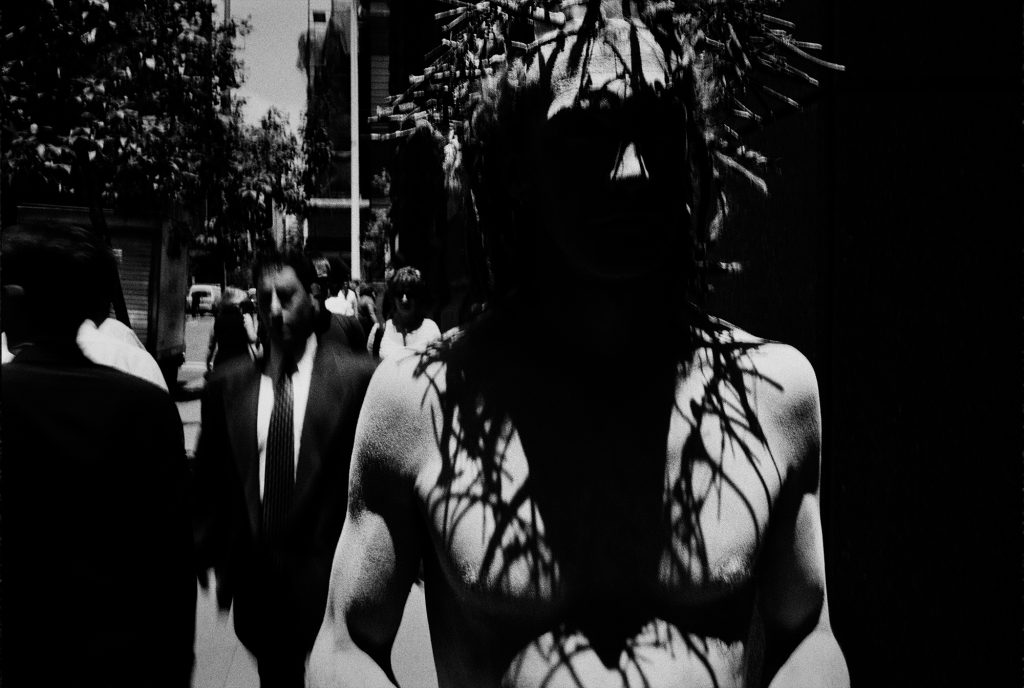
Die Bilder im Innern des Buches schließlich greifen zum Teil auch Motive aus der „Minutes to Midnight”-Serie wieder auf. Das erste Bild zeigt den Sternenhimmel. Es ist das Kreuz des Südens. Astronomiekundige wissen nun also, dass wir auf der Südhalbkugel sind, vermutlich wohl noch immer in Australien. Die nächsten Seiten zeigen auf den ersten Blick weitere Bilder von Sternen. Oder nicht? Spätestens beim fünften Bild erkennen wir nun, dass es sich um Tausende von einer Beleuchtungsquelle bestrahlte Insekten handelt. Angelehnt an jenes erste Bild aus „Minutes to Midnight“, nur dass jenes eben dunkle Insekten vor hellem Grund zeigte, dieses jedoch helle Insekten vor Nachthimmel. Blättern wir weiter. Wir kommen nun zu weiteren Lichtflecken vor dunkler Nacht: Lichter von Autos im Stau auf einer Straße, schließlich Blitze, dann betreten wir die Zivilisation: Beine, die eine nächtliche von Autos bestrahlte Straße überqueren. Dann betreten wir die Kulturgeschichte: ein Wecker mit einem Jesus am Kreuz als Motiv. Es geht weiter: Brücken, Menschen, Gegenlicht, unscharfe Gesichter im Vordergrund, schließlich taucht auf einem der Bilder das Weltallmotiv vom Anfang wieder auf: der Mond auf irgendeinem Werbeplakat oder so. Nun tauchen immer mehr Bilder auf, die herkömmlichen Straßenfotografien ähneln, mit drastischen Hell-Dunkel-Kontrasten und mit rätselhaftem Inhalt. Menschen in der Stadt. Ein Typ in einem Mülleimer, eine leuchtende Dame mit Werbeplakat. Durchaus lustig.
Nun taucht mir nebenbei eine Assoziation zu dieser Erzähleise auf, die mir hilft, das Narrativ dieses Buches einzuordnen: Walter Ruttmanns expressionistischer Dokumentarfilm BERLIN – DIE SINFONIE DER GROSSSTADT, jene experimentelle Montage von assoziativ zusammengefügten Bewegtbildern aus dem Berlin des Jahres 1927. Chaos, Zufall, Menschen, Assoziationen, Großstadtbilder.
Schließlich taucht das erwähnte Insektenbild, das den Anfang von MINUTES TO MIDNIGHT bildet, auch in MONUMENT auf. Wir sind wieder auf dem Weg zur Abstraktion: Insekten, spuren vielleicht von Funken, vielleicht von Fledermäusen. Und dann begegnet uns jenes dunkel kontrastierte Bild der Silhouette von Sydney, samt der Oper, jenes Bild, das ebenfalls schon in MINUTES TO MIDNIGHT vorhanden war. Immer wieder werden wir Bilder sehen, die wir schon kennen. Oder ich glaube sie zu kennen, nun in neuem Kontext. Eine sonderbare Figur mit Helm, die alle Viere von sich streckt, taucht nun mehrfach auf – sie gleicht ein bisschen den bereits erwähnten Flughunden, die ihre Flügel von sich gestreckt haben. Immer häufiger Schatten von Menschen auf langzeitbelichteten, vorbeifahrenden Fahrzeugen, auch das ist ein Motiv, ist eine Serie, die es in MINUTES TO MIDNIGHT bereits gab.
Verwackelte, unscharfe Motive von Menschen auf der Straße, Vergrößerungen von Menschen, man erkennt die Körnung des Films. Auch die Menschendarstellungen werden nun wieder abstrakter, bis die Gesichter nur noch andeutungsweise zu erkennen sind. Die Körnung des Filmmaterials tritt immer mehr in den Vordergrund. Und schließlich wandelt sich diese Körnung wieder zu Bildern des Sternenhimmels, wie zu Beginn des Buchs.
Die Deutung dieses Buchs ist offen. Es verweigert sich messerscharfer Analysen und Interpretationen. Ein paar Dinge faszinieren mich: wie sehr es Trent Parke gelingt, mit den zum Teil gleichen Bildern wie aus MINUTES TO MIDNIGHT nun eine komplett andere Geschichte zu erzählen. Aber was erleben wir mit diesem Buch? Schauen wir auf die Welt mit dem Blick Außerirdischer, die die Aufzeichnungen auf der Voyagersonde gefunden haben und nun auf der Erde nachsehen wollen, was sie hier antreffen? Dafür spräche die komplette Verweigerung von Text, Titel, Erklärung – der Blick aus der Fremde. Vielleicht. Vielleicht ist das aber auch eine Deutung, die viel zu konkret, zu sehr enträtselt ist.
Ich mag eigentlich meine Ruttmann-Assoziation, jene Idee des scheinbar zufälligen Montierens von Großstadtbildern, das sich aber zu einer visuell-musikalischen Komposition fügt, voller Kontrapunkte, Motive, Melodien, Themen. Ein Buch-Film, ebenso wie eine Buch-Komposition. MONUMENT ist ein faszinierendes, mutiges, beeindruckend gefertigtes, rätselhaftes Buch. Ein Glücksfall, dass solch ein sperriges Werk zum Erfolg werden kann.
ISBN—978−1−913288−57−0
Pages—296
Details—Flexibound / Embossed leather cover / Blind stamped end sheets / Sprayed edges / Metal plaque / Multiple paper weights / Gatefolds
Size—314x251mm