
„PARIS PERDU” (‚LOST PARIS’): Photographs from the Streets of Paris by Jörg Rubbert
Street photography exhibition PARIS PERDU by Berlin photographer Jörg Rubbert is still at Central European House of Photography in Bratislava until May 27th, 2023. Slovakian TV has reported about the exhibition, here’s the link to it (starting at 7′50″):
https://www.rtvs.sk/televizia/archiv/14142/403154#711
Take a contemplative stroll through the streets of Paris with the exhibition „PARIS PERDU” (Lost Paris). Berlin-based photographer Jörg Rubbert began his foray into capturing scenes of everyday life in the 1980’s, when he shot series of ordinary people. Here he turns his camera on the streets of Paris and its citizens, capturing how the city has changed from 1988 to 2019.
On his visual time travel through Paris, he observed different facets of the metropolis: he took pictures by day and by night at different locations, social hot spots and bourgeois districts, entertainment districts and representative squares. With empathy but often also with wistfulness Rubbert documented the change, what fascinates him about Paris and what defines the DNA of Paris for him: the unique character of this city, its liberality and cosmopolitanism.
Rubbert’s pictures characterize the city in two ways: on the one hand it takes an emphatically nostalgic look at Paris with its prominent buildings and its picturesque atmosphere; on the other hand, it documents everyday life and the current social situation in the city – the forgotten Paris of the immigrants from the Maghreb countries and their associated economic and ethnic exclusion. The ‚old’ meets a new, multicultural Paris. A Paris with two faces so to speak …

Using imperfect, textural black and white film, each of Rubbert’s images has a peaceful quiet where you feel as if you can hear the subject’s thoughts. Nostalgia is juxtaposed with the new multicultural essence of Paris, with focus on daily activities like reading the paper, gathering with neighbors, or looking out over the Seine. What results is a tender, thoughtful love letter to Paris, its transitions and the people who have called it home.
‚PARIS PERDU’ (Lost Paris)
Opening: April 19th 2023, 06:00 p.m.
Exhibition from April 20th to May 27th
Opening hours: Tue to Sun from 01:00 p.m. to 06:00 p.m.
Central European House of Photography
Stredoeurópsky dom fotografie (Sedf)
Prepoštská 4
P.O.BOX 290
814 99 Bratislava / Slovakia
http://www.sedf.sk
phone: +421 918 619 077
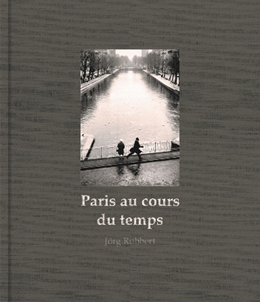
Photo book: „Paris au cours du temps” © Jörg Rubbert
Hardcover, 208 pages, 160 b&w images, Format: 24,50 x 28,00 cm
Languages: English/French/German
Published by Kettler-Verlag, Dortmund, Germany

About the photographer
For Jörg Rubbert, born 1963 in the small town of Bad Segeberg (Northern Germany), the urban living and the city as a developing organism are one of his main photographical topics. His pictures were presented in numerous exhibitions and publications in contemporary photography – with focus on Paris, New York and America’s Southern States. Rubbert represents the humanistic direction of photography which aims to focus on people’s social environment.
His photographs were shown on exhibitions and photo-festivals at home and abroad and featured in numerous media, i.a. CNN, ZEIT, FAZ, WELT, Tagesspiegel, PHOTO International, Photo Klassik, PHOTOGRAPHIE.
He lives and works as a freelance photographer in Berlin, Germany.
Making of
Jörg Rubbert’s long-running photo series was shot over a period of more than 30 years, from 1988 to 2019. The early photographs from 1988 to 1990 are the result of numerous visits to the city during his work as a sleeping car attendant on the night trains from Hamburg or Hannover to Paris. Later visits to Paris comprise short trips with his daughter (2018) and a few one-week solo trips (2019), mostly in autumn because of the special daylight at this time of the year.
Rubbert’s photography belongs to the typical ‚Street Photography’ genre. For him the special atmosphere of the city in general and the situation of its inhabitants in particular are the main subjects. To this day he takes analog pictures without any technical refinements, „unplugged” so to speak. He always relies on the existing lighting conditions and uses only standard lenses for his pictures to allow the displayed image section to appear as authentic as possible. The style of the photos is determined by the conditions under which they are taken, making them partly look like ‚failed pictures’: Rubbert’s images are imperfect in a natural sense, blurred and sometimes even grainy, to make them look authentic and create an atmospheric density. In the production process of his full-size prints, he avoids any manipulative interventions. The finished prints are therefore no high-resolution images but atmospheric images – picturesque and rich in contrast.
The analog photos shown in this exhibition were taken with black-and-white 35-mm film by Kodak (T‑Max with 400 ASA). The 35-mm negatives were afterwards scanned in 300 dpi high-resolution by the laboratory Pixel Grain, Berlin, and printed on silver gelatin (baryta) photo paper.
The majority of the photos were shot with a Nikon-F2 35-mm reflex camera. The lenses used were a standard lens Micro-Nikkor 1:3.5/55 mm as well as a zoom lens Nikkor 1:3.5/43–86 mm. Recent pictures (from 2019) were shot with a Minolta CLE viewfinder camera with the Minolta-Rokkor 1:2.0/40 mm standard lens.